You’re not hiring a consultant or a coach. You’re hiring an owner who already did this.
Thirty-five years building the systems businesses run on, now pointed at one job: making a business work when its owner walks out.
We did it to our own businesses first.
We have owned three businesses. Every one of them ran on us at the start. Every one of them runs without us now.
Our investigation firm runs on about 20 minutes a month. Our medical supply store, 18,000 customers, runs on one remote worker.
We got there the hard way, over years. Then we asked how we would do it again for someone else, with AI doing the reading.
So we tested it on the store.
Every workflow in the store was recorded once, by the person who does it. AI turned each recording into a manual. Then AI read all the manuals together, as one company.
It found twenty things to cut or fix. It found eight things the store does every day that were written nowhere. And it found a piece of software we had built years ago, forgotten about, and never wrote down. If we had decided to sell the store the month before, a buyer could have found it before we did.
That is what a buyer is afraid of. The thing only the owner knows. We find it first.
That test became the method. It is what we do now for every client.
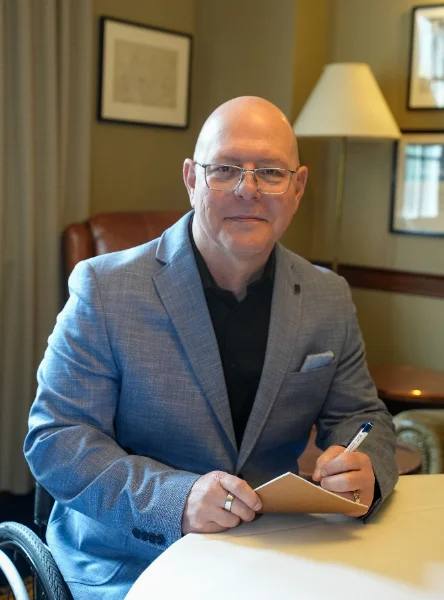
Thirty-five years of building the parts nobody sees.
We helped build large-scale infrastructure at Shaw, Bell, and the Government of Alberta, then built and ran the technical backbone of our own companies. That is where the instinct comes from: strip a job down to what it needs, then make what is left simple enough for anyone to run.
We work in your business, not above it.
Your staff record their own work. We read it. That is how we see what really happens, not just what the manual says happens.
We only fix what stands between you and a sale.
Your broker tells us what the business is worth now and what it could be worth without you in it. We fix the operating problems behind that gap. If your broker says a fix will not move the number, we say so and you keep your money.
Find out where your business stands.
15 questions, 5 minutes, no cost. You will see how much of the business still runs through you.